Introduction to ER Model
ER Model is a high-level data model, developed by Chen in 1976. This model defines the data elements and relationships for a specified system. It is useful in developing a conceptual design for the database & is very simple and easy to design logical view of data.Importance of ER Model
- ER Model is plain and simple for designing the structure.
- It saves time.
- Without ER diagrams you cannot make a database structure & write production code.
- It displays the clear picture of the database structure.
ER Diagrams
- ERD stands for Entity Relationship diagram.
- It is a graphical representation of an information system.
- ER diagram shows the relationship between objects, places, people, events etc. within that system.
- It is a data modeling technique which helps in defining the business process.
- It used for solving the design problems.
| Notations | Representation | Description |
|---|---|---|
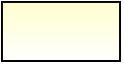 | Rectangle | It represents the Entity. |
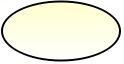 | Ellipse | It represents the Attribute. |
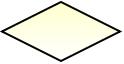 | Diamond | It represents the Relationship. |
 | Line | It represents the link between attribute and entity set to relationship set. |
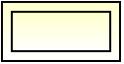 | Double Rectangle | It represents the weak entity. |
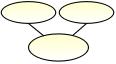 | Composite Attribute | It represents composite attribute which can be divided into subparts. For eg. Name can be divided into First Name and Last Name |
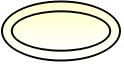 | Multi valued Attribute | It represents multi valued attribute which can have many values for a particular entity. For eg. Mobile Number. |
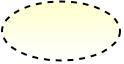 | Derived Attribute | It represents the derived attribute which can be derived from the value of related attribute. |
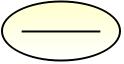 | Key Attribute | It represents key attribute of an entity which have a unique value in a table. For eg. Employee → EmpId (Employee Id is Unique). |